
Finally it has arrived, the NEW PREMISES ISSUE.
We are so excited to announce that the Ore Clinic has finally been agreed and approved, and we will be aiming to move equipment into it by the end of the year, and will be starting clinics there as soon as it is operational. There will be an official opening ceremony at 1pm on the 1 December 2025. See survey link below if you are interested in the chance to attend.
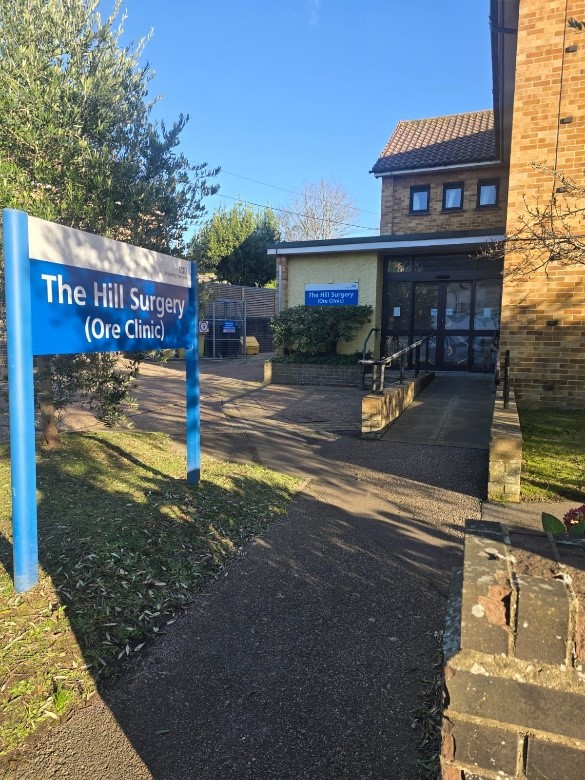
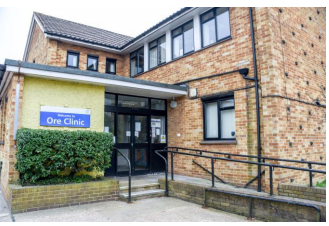 Historic Photo
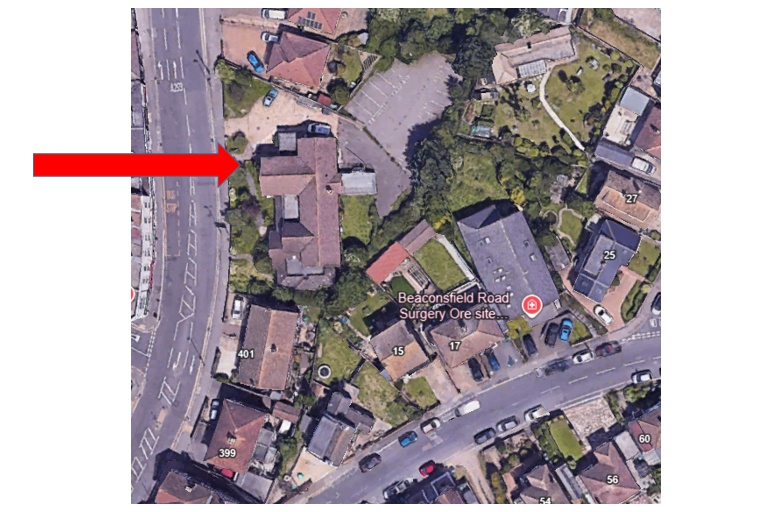
This building, on Old London Road, Ore, although not new, is CQC compliant.
The access arrangements are far better than our current sites as it has proper disabled access and disabled parking and has some patient parking in the rear (see photo). There are 4 bus stops within a minutes walk and the site backs onto the Fairlight road Surgery Site. It is central to our catchment of East Hastings, Pett and Fairlight villages.
Ore village provides better connection and public transport links than our sites at Beaconsfield Road (now closed) and Harold Road, which are located in crowded residential areas. Location in the heart of the Ore commercial area has many advantages, as well as the onsite and on road parking, Patients tell us that they combine shopping at the Co-op, Aldi’s or visiting the Ore centre, and have used their car parking when popping into the Ore Site. There are a number of outlets to buy a coffee, when appointments are running late, and other small shops and pharmacies to allow you to get everything done in one outing.
We will have up to 15 usable clinical rooms with administrative offices above, and we will be able to accommodate the majority of our administrative team in one place.
We will be bringing you further pictures and details from the inside, as soon as we have access, and will be briefing you on clinic arrangements.
It is anticipated that the nursing team will be primarily located at this new site. We will be surveying you on site preference at the end of this news letter for scheduling clinics.
Would you like to come to the official new premises hand over and tour, as part of our Patient Participation Forum?
We will be holding an in person patient involvement meeting (PPG meeting) asking for first impressions and suggestions around the building. We will be providing refreshments afterwards, and will be able to accommodate around 20 patient participants. If we have, more interest than that we will have to pull names out of a hat.
https://www.surveymonkey.com/r/L73CY3C
Meet the team:
Medication management team

Meet Your Medicines Management Team & Understanding the Repeat Prescription Process
Managing your health is a partnership — and your Medicines Management Team is here to help make it easier!
Who are the Medicines Management Team?
The Medicines Management Team is a group of healthcare professionals, including pharmacists, pharmacy technicians and dispensers who work behind the scenes to ensure you get the right medicines, in the right way, at the right time. They help manage and review your medications to make sure they are safe, effective, and suitable for your needs.
What does the team do?
- Review your medicines: They check your prescriptions to avoid any potential side effects or interactions.
- Support your treatment: Offering advice on how to take medicines properly and remind you to book appointments for your blood tests, reviews, BP checks, etc.
- Coordinate care: Working closely with your GP and other healthcare professionals to make sure the medicines you are taking are safe and effective.
- Help with repeat prescriptions: Ensuring you get your medications on time without hassle.
Understanding the Repeat Prescription Process
If you’re on long-term medication, you’ll likely use the repeat prescription service. Here’s how it works and some tips to make it smooth:
- 1. Requesting your repeat prescription:
When you need more medication, you can request a repeat prescription in the following ways:
- online via the NHS App or on Patient Access
- using the automated phone system
- In writing Using the prescription counterfoil (usually the right-hand side of the prescription) and posting it in the prescription box
- Via your community pharmacy
- 2. Checking your medicines:
The Medicines Management Team reviews your request to ensure your medications are still appropriate and safe for you.
- 3. Preparing your prescription:
Once approved, the prescription is prepared and sent to your chosen pharmacy or made available for collection.
- Tips for a Smooth Repeat Prescription Experience
- Plan ahead: Request your repeat prescription at least 3 working days before you run out to avoid delays.
- Keep your details updated: Make sure your GP practice has your current contact information (email address, home and mobile numbers).
- Use online services: Use the NHS App or Patient Access for quick and easy prescription requests.
- Review your medicines regularly: Let your Medicines Management Team know if you experience any side effects or have questions.
- The Hill Surgery Pharmacy: We dispense and deliver prescriptions to Pett and Fairlight Village halls Mon to Fri. Do consider using this service if you live in these areas.
Your health matters, and the Medicines Management Team is here to support you every step of the way. If you ever have questions about your medications or the repeat prescription process, don’t hesitate to ask us.
Other Surgery News:
Flu season (and other nasty winter infections) will be upon us, we are contacting patients who are eligible for flu immunisations. Eligible groups can get both flu and covid from a local pharmacy. The house bound and care home patients are being immunised by the PCN, and we are concentrating on flu for the rural non-house bound patients. Other immunisations are also available for eligible groups from the surgery including RSV, and pneumococcal. If you fit the current eligibility cohorts, and have not been called, please contact the surgery for advice.
Eligibility for NHS Respiratory immunisations:
Flu:
- pregnant women
- all children aged 2 or 3 years on 31 August 2025
- primary school aged children (from Reception to Year 6)
- secondary school aged children (from Year 7 to Year 11)
- all children in clinical risk groups aged from 6 months to less than 18 years
- those aged 65 years and over
- those aged 18 years to under 65 years in clinical risk groups (asthma, copd, diabetes, cancer)
- those in long-stay residential care homes
- carers in receipt of carer’s allowance
Covid:
- adults aged 75 years and over
- residents in care homes for older adults
- individuals who are immunosuppressed aged 6 months and over
RSV (one off injection):
- Routine cohort:
All adults who turn 75 on or after September 1, 2024, are eligible for a single dose of the RSV vaccine. This is an ongoing, annual program.
- Catch-up cohorts:
A one-off campaign for those aged 75 to 79 at the program’s start (September 1, 2024).
- These cohorts include adults born between September 1, 1948, and August 31, 1949 (turning 75 in September 2024) and those born in earlier years
- They are eligible for the vaccine until their 80th birthday, with those who were 79 at the start of the program being eligible until August 31, 2025.Pregnant women:
- The program includes a specific cohort for pregnant women to protect their babies.
- Pregnant women who are at least 28 weeks pregnant on or after September 1, 2024, are eligible to receive a single dose of the RSV vaccine.
- They are eligible for the vaccine until their 80th birthday, with those who were 79 at the start of the program being eligible until August 31, 2025.Pregnant women:
- Pneumococcal:
- Age 65 and over:
All individuals in this age group are eligible for a single dose of the vaccine, usually starting at age 65.
- Higher-risk adults and children:This includes people with long-term health conditions such as:
- Chronic obstructive pulmonary disease (COPD) or cystic fibrosis
- Chronic kidney disease
- Chronic liver disease, such as cirrhosis
- Heart conditions, such as coronary heart disease or heart failure
- Sickle cell disease
- Cystic fibrosis
- Problems with your spleen or if you’ve had your spleen removed
- Diabetes
- Babies:
- Schedule:A dose at 12 weeks, followed by a booster at one year.
- Note:The infant schedule changed in 2020; the current schedule is two doses of PCV13.
Important considerations
- High-risk individuals:
Some people in higher-risk groups may need extra doses or regular doses. You should contact your GP surgery if you are in this category.
- Re-immunisation:
For individuals with asplenia, splenic dysfunction, or chronic kidney disease, re-immunisation with PPV23 is recommended every five years.
- Before surgery or treatment:
If you are scheduled for a splenectomy, chemotherapy, or radiotherapy, vaccinations should be planned carefully with your doctor, ideally at least four to six weeks before the procedure.
Other vaccinations for the elderly:
Shingles:
The NHS shingles programme is moving from a routine vaccination for 70-year-olds to one offered from age 60, with a phased rollout and specific cohorts being targeted. The main cohorts are:
- Immunocompetent individuals:
Those turning 65 or 70 each year (age 60 and 65 from September 2028) remain eligible until their 80th birthday and can receive two doses of Shingrix.
- Immunocompromised individuals:
Those aged 18 and over with a severely weakened immune system are also eligible for two doses, with a quicker second dose interval.
Immunocompetent cohorts
| Cohort | Details |
| Turning 65 (1 Sept 2023 – 31 Aug 2028) | Eligible to receive two doses of Shingrix and remain eligible until their 80th birthday. |
| Turning 70 (1 Sept 2023 – 31 Aug 2028) | Eligible to receive two doses of Shingrix and remain eligible until their 80th birthday. |
| Turning 60 (from 1 Sept 2028) | Will become eligible for the vaccine as part of the second stage of the phased rollout. |
| Over 80 | Those who turn 80 after receiving their first dose will still receive the second dose, as long as it’s before their 81st birthday. |
Immunocompromised cohorts
| Cohort | Details |
| Adults aged 18 and over | Eligible from September 1, 2023. |
| Severely weakened immune system | These individuals can receive two doses of Shingrix with the second dose given between eight weeks and six months after the first. |
Technology news
:
Our new Automated phone system (robot telephone receptionist or PhoneBot) has had a slightly shaky start, which has not been helped by a different regional and national IT and telephone system service interruptions everyday recently, but things seem to have settled down. Those that have managed to log on and use it seem happy with the lack of waiting time, although getting annoyed and swearing at the Robot has lead so some amusing notes entries, as you have to remember it transcribes verbatim what you are saying.
New Robot Features we are in the process of activating everyone on repeat medications to use the automated medication ordering feature, you will be given a PIN number (unless you have logged onto the system already) and you will then be able to use the phone to order medications during working hours. This is very useful for those without the NHS app or internet or visual problems.
There is an access survey at the end of the news letter.
Friends and Family feedback result

Department of health news:
You will have seen the fan fare in the press from Mr Streeting’s team (conveniently timed to coincide with the Labour party conference) that the GP contract has changed so surgeries have doors open and phones and online consultation requests are available from 8am to 6.30pm. The intention is that all requests for appointments will be accommodated, somehow. There has been a lot of push back from the profession as GP time and resources are finite and the surgery funding to pay for this, only reflects the current capacity and we have to prioritise the unwell patient.
At The Hill, we are averaging 1500 requests per week for a shade under 20,000 patients. Our call allocators are managing well. Surgeries are being told to implement hospital style waiting lists, to cope with demand for less serious issues, but so far we have managed to clear the daily requests by the end of the week. Please remember general practice is no longer an emergency service. If you need immediate attention, for something life threatening, you will need to call 999 and visit A+E.
We will be using the Pharmacy First provision far more, as it is now several months since the new pharmacy services have operational, they are funded for the following conditions:
- Sinusitis:(children and adults aged 12 years and over)
- Sore throat: (children and adults aged 5 years and over)
- Earache: (Acute otitis media, children aged 1 to 17 years)
- Infected insect bite: (children and adults aged 1 year and over)
- Impetigo: (children and adults aged 1 year and over)
- Shingles: (adults aged 18 years and over)
- Uncomplicated urinary tract infection (UTI):in women (women aged 16 to 64 years
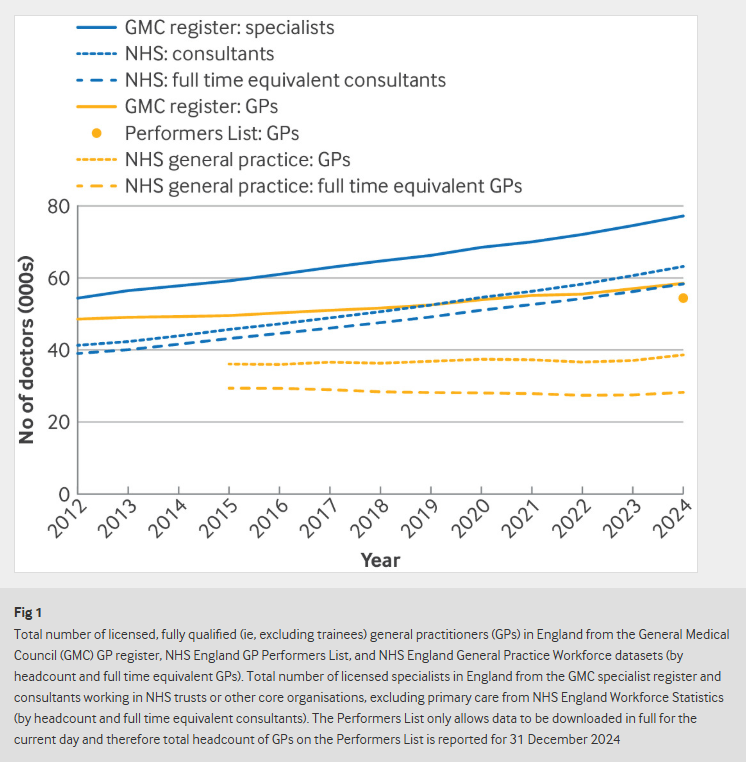
To throw a bit of cold water on the Departments of Health and Social Care’s trumpeted plans for unlimited GP access, although there has been a marginal increase in GP numbers, unfortunately as a lot of GPs are now part time, there has been a reduction in Full time equivalent GP’s (total GP hours available) over the past 10 years. During this period from 2015, the UK population has gone up by about 5 million, and life expectancy has risen from about 80 to 82 on average, and an older population usually means sicker, more complicated and in need of more healthcare input. Please be mindful that 5 emails in a day about dandruff, dry skin and pimples, will not result in 5 appointments (we jest not).
https://www.bmj.com/content/390/bmj-2024-083978
ICB news:
There is a lot going on locally, this link is to all the news letters:
https://www.sussex.ics.nhs.uk/category/sussex-health-care/nhs-sussex-in-focus-newsletter/
Access Survey: